
AMR, Culture Test और Hospital Infection: कब Medico-Legal Risk बनता है?
हर antibiotic failure medical negligence नहीं होता — लेकिन prescription record, culture report, infection-control file और treatment timeline medico-legal review में important हो सकते हैं.

This article is for general legal awareness and educational purposes only. It is not legal advice, advertisement or solicitation.
Founder, LegalMedico — healthcare law and medico-legal knowledge platform focused on medical negligence, hospital compliance, health insurance disputes, healthcare advertising compliance and health-tech legal risk.
Antibiotic fail होना अपने आप medical negligence नहीं होता.
लेकिन जब infection control नहीं हो रहा, fever बढ़ रहा है, surgery wound खराब हो रहा है, ICU infection develop हो रहा है, culture report delay है, antibiotic बार-बार बदली जा रही है, या hospital stay और bill अचानक बढ़ रहा है — तब patient और family के मन में medico-legal सवाल उठना स्वाभाविक है.
सही सवाल यह नहीं है कि “antibiotic काम क्यों नहीं कर रही?” सही सवाल यह है कि prescription, culture report, patient monitoring, infection-control file, discharge advice और treatment timeline क्या दिखा रहे हैं.
Indore में Antibiotic Resistance चर्चा में क्यों है?
Recent public reporting from Indore has highlighted concerns around antibiotics becoming less effective, ordinary infections becoming difficult to treat, and patients facing higher treatment cost when infection does not respond to routine antibiotics.
This article uses public discussion only as legal-awareness context.
This page does not comment on the merits of any individual doctor, hospital, patient case or treatment decision. It explains how AMR, culture sensitivity testing, hospital infection, medical records and treatment timeline may become relevant in medico-legal review.
AMR क्या है — simple language में
AMR यानी antimicrobial resistance ऐसी स्थिति है जहाँ bacteria, virus, fungus या parasite medicines के प्रति resistant हो जाते हैं. Antibiotic जो पहले असर करती थी, वह बाद में उतना असर नहीं कर सकती.
Medical issue
Resistant bacteria, severe infection, diabetes, low immunity, ICU stay or delayed treatment antibiotic response को affect कर सकते हैं.
Patient conduct issue
Self-medication, old prescription reuse, incomplete antibiotic course और chemist से antibiotic लेना AMR risk बढ़ा सकते हैं.
Medico-legal issue
Dispute होने पर prescription, culture report, monitoring notes, infection-control records and expert opinion important हो सकते हैं.
हर Antibiotic Failure Medical Negligence नहीं होता
कई बार bacteria resistant होते हैं, infection severe होता है, patient देर से hospital आता है, self-medication होती है, antibiotic course incomplete होता है, diabetes या low immunity infection को complicated बनाती है, या culture report के बाद medicine बदलनी पड़ती है.
Medical negligence का question generally standard of care, accepted medical practice, clinical judgment, patient condition, medical records, treatment timeline, monitoring notes, culture reports, infection-control documentation, patient conduct and expert opinion पर depend करता है.
Empirical Antibiotic देना हमेशा गलत नहीं होता
Emergency, suspected sepsis, severe infection, post-operative infection, ICU patient, complicated UTI, diabetic foot infection or pending culture report situations में empirical antibiotic clinically justified हो सकती है.
Doctors के लिए medico-legal point
Empirical antibiotic का clinical reason notes में दिखना चाहिए: provisional diagnosis, patient condition, pending culture, review plan and escalation reason.
Patients के लिए practical point
Empirical antibiotic use देखकर तुरंत “wrong antibiotic” conclude नहीं करना चाहिए. Records और clinical context देखकर ही position समझी जा सकती है.
Culture Sensitivity Test कब important हो सकता है?
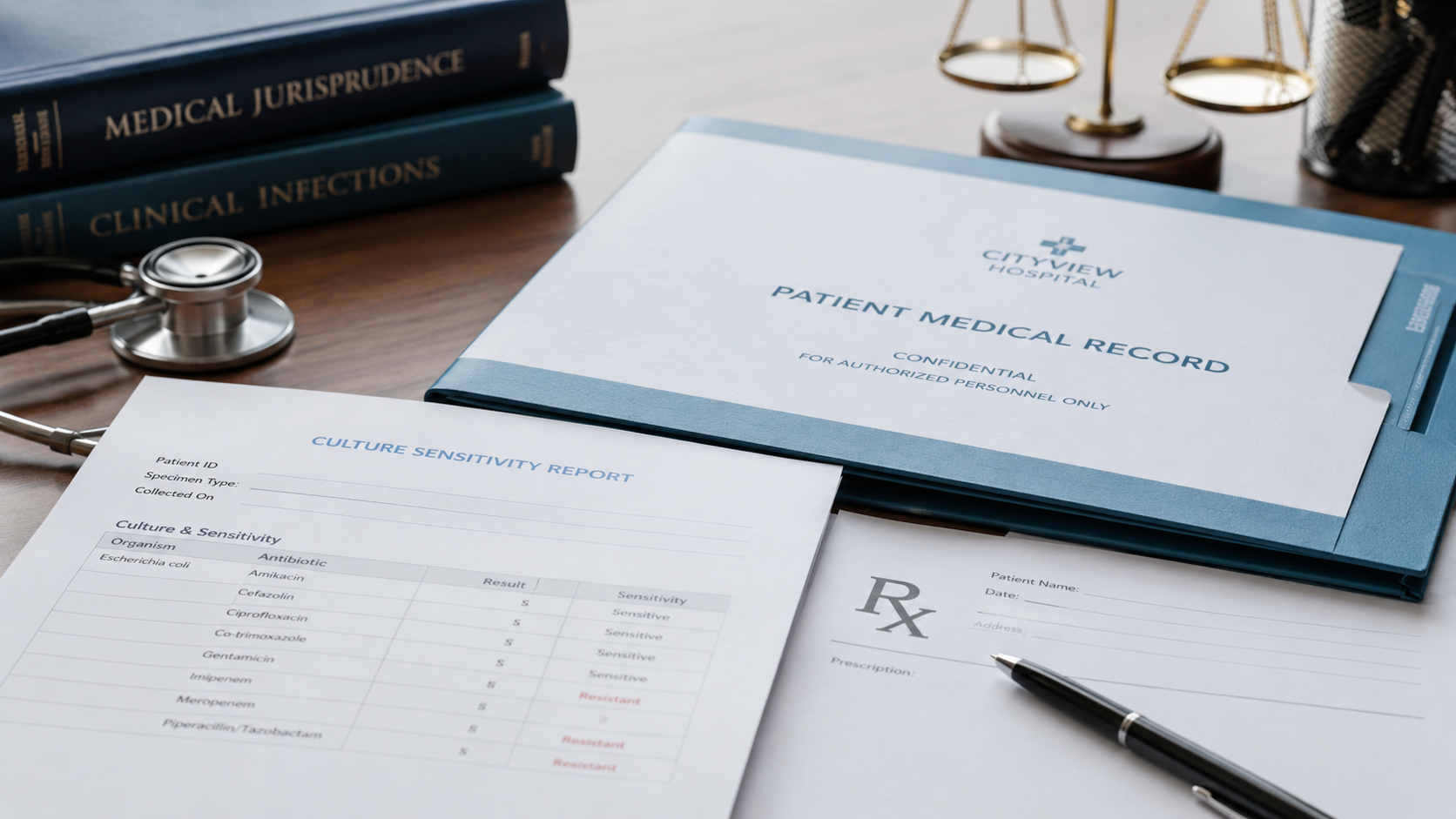
Culture test हर minor infection में जरूरी नहीं होता. But recurrent infection, non-response, severe infection, post-operative wound infection, ICU infection, suspected resistant organism or repeated antibiotic failure में यह clinically relevant हो सकता है.
Culture क्या बताता है?
कौन सा organism infection कर रहा है और कौन सी antibiotic sensitive या resistant है.
Report के बाद क्या हुआ?
Antibiotic modify हुई, continue हुई, या escalation हुआ — reason record होना important हो सकता है.
Legal question
Culture test magic document नहीं है, लेकिन infection treatment की direction समझने वाला important evidence हो सकता है.
LegalMedico AMR Medico-Legal Audit
AMR-related infection dispute को केवल “antibiotic काम नहीं कर रही” की तरह नहीं देखना चाहिए. File को six layers में review करना चाहिए.
Prescription Layer
क्या antibiotic symptoms, clinical signs, provisional diagnosis, allergy history and patient condition के basis पर दी गई?
Culture Test Layer
Culture sensitivity clinically indicated था या नहीं? Report आने पर treatment reviewed हुआ या नहीं?
Response Monitoring Layer
Fever, vitals, WBC, CRP, pus, sepsis signs and clinical response documented थे या नहीं?
Escalation Layer
Antibiotic change, specialist referral, ICU transfer, drainage/debridement or repeat evaluation का reason documented था?
Infection-Control Layer
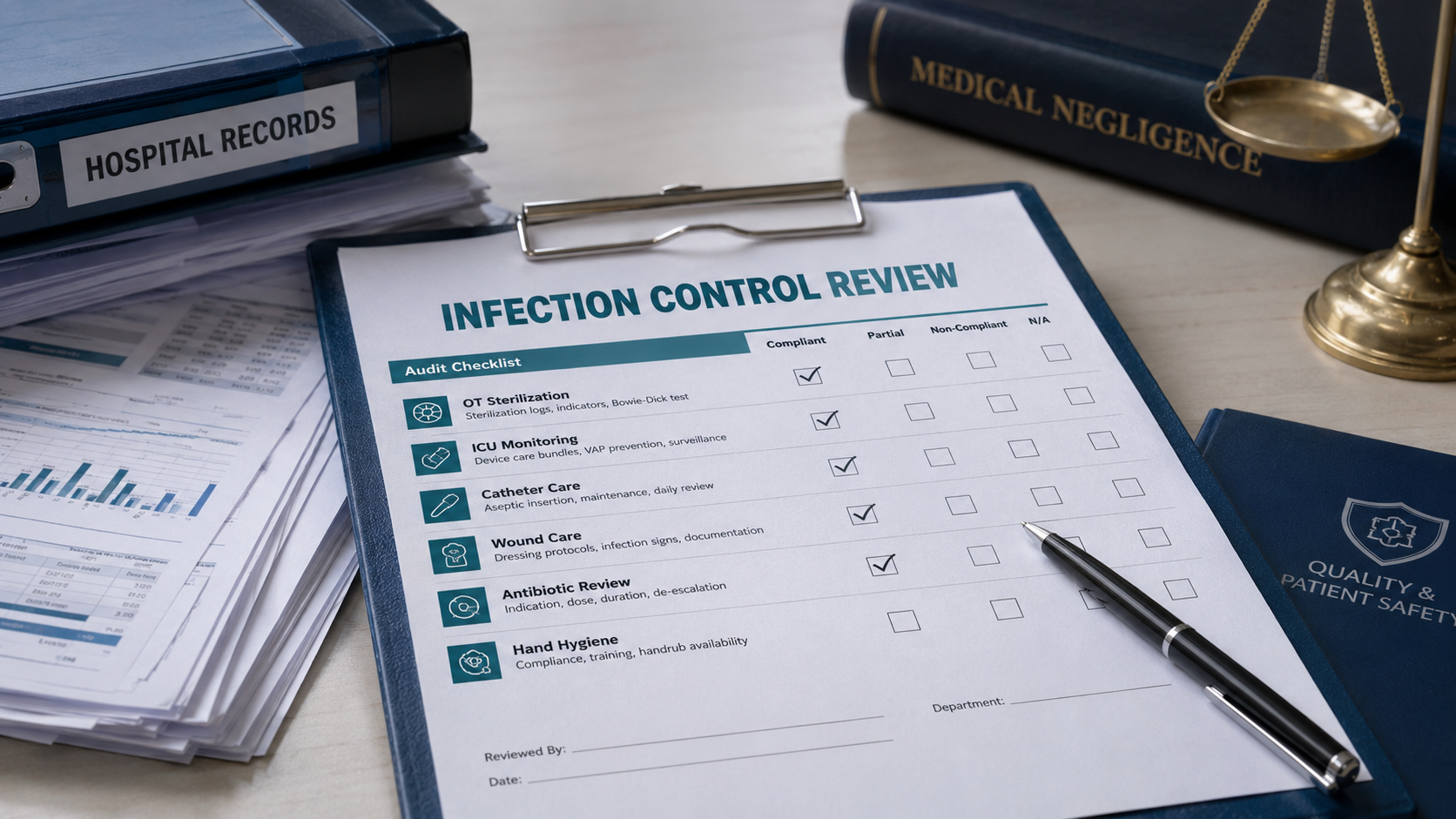
OT, ICU, catheter, ventilator, wound care, sterilization and infection-control records क्या दिखाते हैं?
Evidence Layer
Prescription, culture report, discharge summary, nursing notes, bills and timeline support करते हैं या contradict?
Hospital Infection: complication या negligence?
Hospital-acquired infection का मतलब automatically negligence नहीं है. Hospitals high-risk environments होते हैं. ICU, OT, catheter, ventilator, drains, wound dressings, long stay, diabetes and immune suppression infection risk बढ़ा सकते हैं.
Legal question is not only “infection happened.”
Legal review में यह देखा जा सकता है कि infection-control protocols, sterilization records, catheter care, wound care, ICU notes, antibiotic policy, culture review, escalation and counselling records reasonably maintained थे या नहीं.
Surgery infection और ICU infection में कौन से records important होते हैं?
Surgery के बाद infection
Post-operative infection known complication हो सकता है. लेकिन consent, pre-op condition, antibiotic prophylaxis, OT note, wound care, follow-up, culture report and escalation notes important हो सकते हैं.
ICU infection
ICU patient high-risk हो सकता है. Ventilator, central line, catheter, drains and severe illness infection risk बढ़ाते हैं. ICU records and infection-control file medico-legal review में relevant हो सकते हैं.
Patients और Doctors/Hospitals — दोनों के लिए यह issue important है
यह page patient complaint article नहीं है. यह evidence-first medico-legal risk guide है.
Patients & Families को क्या समझना चाहिए?
- Antibiotic failure automatically negligence नहीं है.
- Prescription, culture report and timeline preserve करें.
- Complete medical records request करें.
- Self-medication history छिपाएं नहीं.
- Social media आरोप लगाने से पहले records review करें.
- Expert/legal review facts पर depend करता है.
Doctors & Hospitals को क्या document करना चाहिए?
- Clinical indication and provisional diagnosis.
- Empirical antibiotic reason.
- Culture advice and report review.
- Antibiotic change/escalation reason.
- Infection-control and OT/ICU records.
- Discharge advice, warning signs and follow-up.
कब legal risk बढ़ सकता है?
| Situation | Not Automatically Negligence | Legal Questions May Arise When |
|---|---|---|
| Antibiotic काम नहीं कर रही | Resistant bacteria or severe infection possible. | No review, investigation or escalation despite deterioration. |
| Culture test नहीं हुआ | हर minor infection में culture जरूरी नहीं. | Severe, recurrent, post-operative or non-responsive infection में culture consideration absent. |
| Antibiotic बदली गई | Culture report or clinical response के बाद change normal हो सकता है. | Repeated changes without reasoning or records. |
| Surgery के बाद infection | Known complication possible. | Consent, OT records, wound care, culture and follow-up records weak. |
| ICU infection | ICU is high-risk setting. | Catheter/ventilator protocol, infection-control and escalation records missing. |
| Patient ने self-medication की | Patient conduct is relevant. | Previous antibiotic exposure not recorded or considered. |
Documents that matter before drawing conclusions
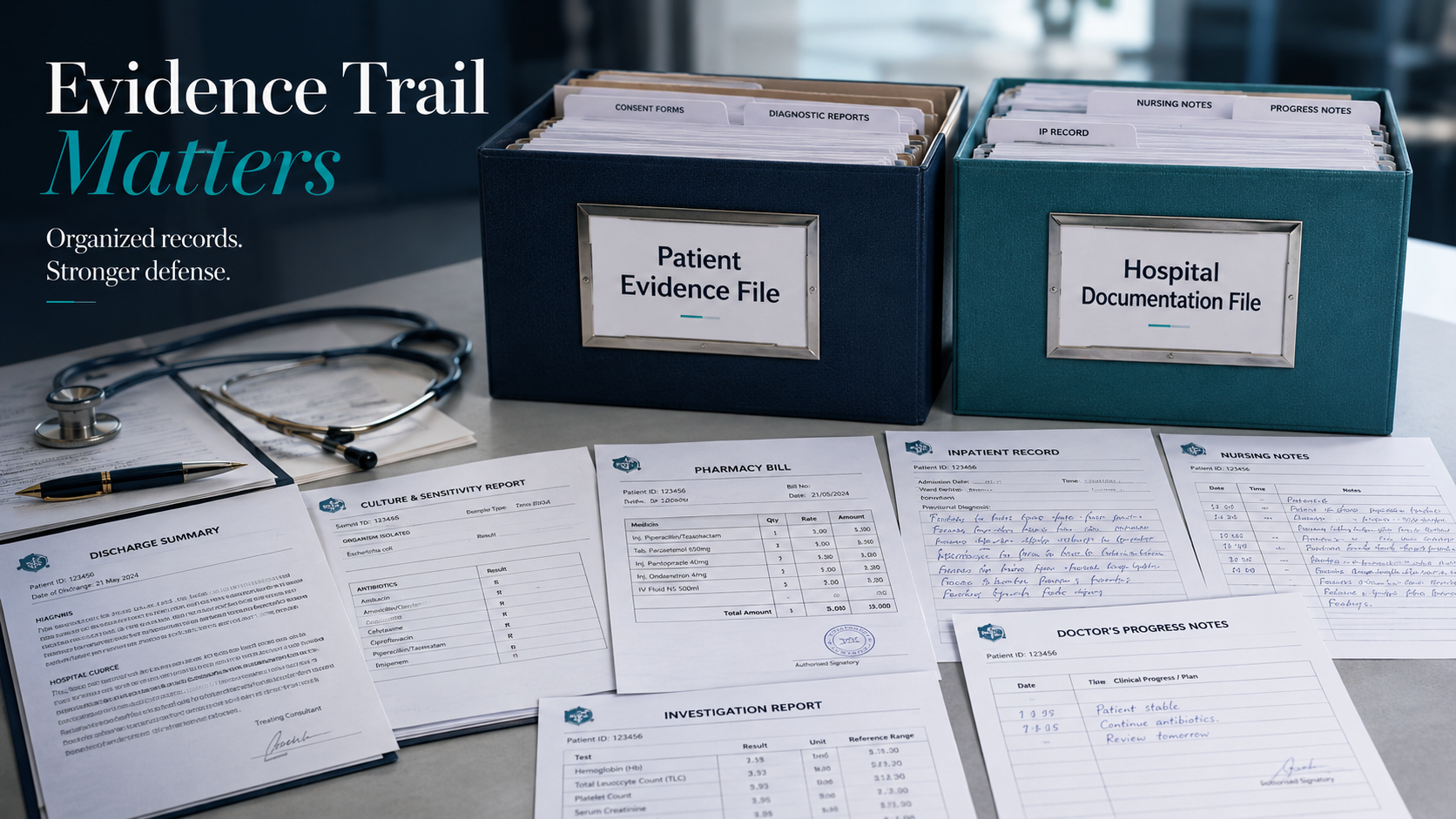
Patient Evidence File
Hospital / Doctor Defence File
Practical medico-legal scenarios
Scenario 1: UTI बार-बार हो रहा है
Patient repeatedly takes antibiotics, but symptoms recur. Culture later shows resistance.
Medico-legal question: Culture कब advised हुआ? Patient ने old antibiotic use की? Report आने के बाद treatment बदला?
Scenario 2: Surgery के बाद wound infection
Post-operative infection develops and patient needs prolonged treatment.
Medico-legal question: Consent, OT records, wound care, prophylaxis, culture and follow-up notes क्या दिखाते हैं?
Scenario 3: ICU resistant infection
Critically ill patient develops resistant infection during ICU stay.
Medico-legal question: ICU infection-control records, catheter/ventilator care, culture report and escalation timeline क्या दिखाते हैं?
Scenario 4: Antibiotic बार-बार बदली गई
Doctor changes antibiotics after poor response or culture report.
Medico-legal question: Antibiotic change का clinical reason documented था या नहीं?
Medical Negligence Law: कैसे देखा जाता है?
Medical negligence generally केवल bad outcome से decide नहीं होती. It depends on standard of care, accepted medical practice, clinical judgment, available records, expert opinion and case-specific facts.
Standard of care
क्या doctor/hospital ने reasonable skill and care use की, यह facts and expert opinion से assess हो सकता है.
Records as evidence
Prescription, culture report, discharge summary, ICU/OT records, nursing notes and counselling records legally relevant हो सकते हैं.
Expert opinion
Antibiotic failure, AMR, hospital infection and negligence issues often require expert medical assessment.
If antibiotic is not working
- Self-medication stop करें and treating doctor से review लें.
- Prescription, antibiotic dose and duration preserve करें.
- Culture test advised है तो timely करवाएं.
- Report आने के बाद doctor review करवाएं.
- Hospitalization हुआ है तो discharge summary and records collect करें.
- Social media allegations से बचें.
For risk reduction
- Clinical indication clearly record करें.
- Empirical antibiotic reasoning document करें.
- Culture advice/report review record करें.
- Antibiotic escalation reason note करें.
- Patient/family counselling document करें.
- Infection-control, OT, ICU and nursing records preserve रखें.
Frequently asked questions
Antibiotic काम नहीं कर रही तो क्या यह medical negligence है?
Wrong antibiotic prescription कैसे assess होती है?
Culture sensitivity test कब important होता है?
Surgery के बाद infection negligence है?
ICU infection में hospital की responsibility क्या होती है?
Patient को कौन से documents preserve करने चाहिए?
Doctor को antibiotic change का reason document करना चाहिए?
Self-medication medico-legal claim को affect कर सकती है?
Hospital-acquired infection prove कैसे होता है?
Can a patient file complaint if infection worsens despite treatment?
क्या antibiotics बिना test के देना wrong है?
Legal issue emotion से नहीं, evidence trail से बनता है.
AMR और antibiotic failure को केवल “दवा काम नहीं कर रही” की तरह नहीं देखना चाहिए. यह medical issue है, public-health issue है, और dispute होने पर medico-legal evidence issue भी बन सकता है.
Patients को जल्दबाजी में negligence assume नहीं करना चाहिए. Doctors को clinical reasoning document करना चाहिए. Hospitals को infection-control records preserve रखने चाहिए.
Sources considered
These sources are included for general legal awareness. Their application depends on facts, records, medical context and current legal position.
Advocate Lokesh Bagani
Advocate Lokesh Bagani is the founder of LegalMedico, a healthcare law and medico-legal knowledge platform focused on medical negligence, hospital compliance, health insurance disputes, healthcare advertising compliance, ART/surrogacy law, POSH compliance and health-tech legal risk.
His work at LegalMedico focuses on helping healthcare stakeholders, patients and families understand legal risk, documentation, compliance duties, patient communication, medical advertising exposure, insurance disputes and medico-legal evidence through legal-awareness content and medico-legal research.
Disclaimer: This content is for general legal awareness and educational purposes only. It does not constitute legal advice, advertisement, solicitation, or create an advocate-client relationship. Antibiotic resistance, hospital infection and medical negligence disputes depend on case-specific facts, medical records, accepted standard of care, expert opinion, patient conduct, infection-control records and applicable legal framework. For case-specific guidance, consult a qualified legal professional.